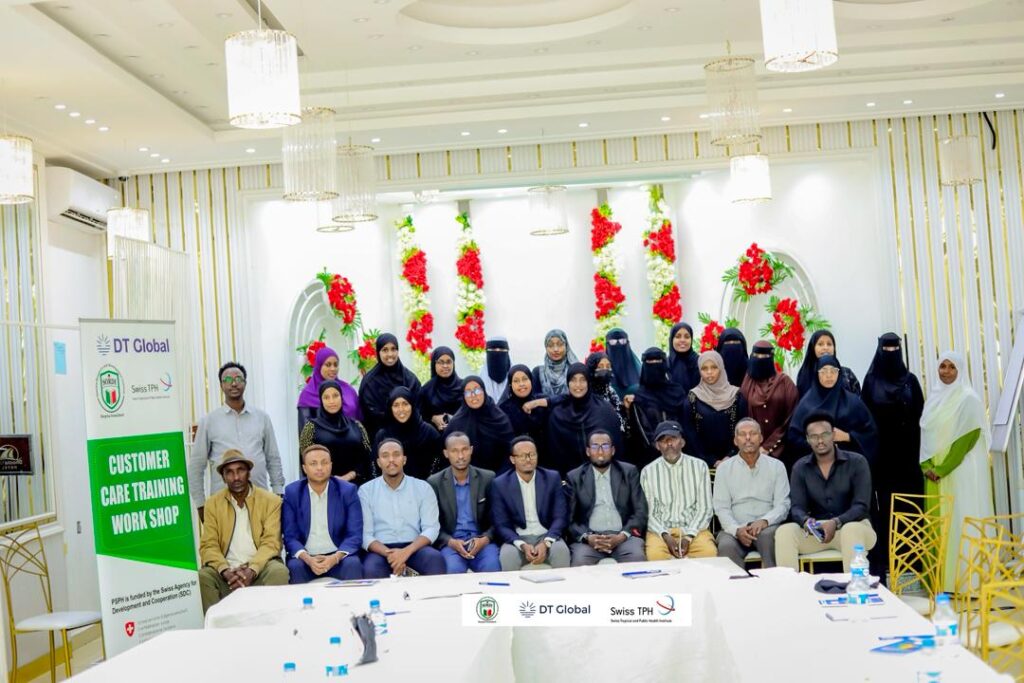
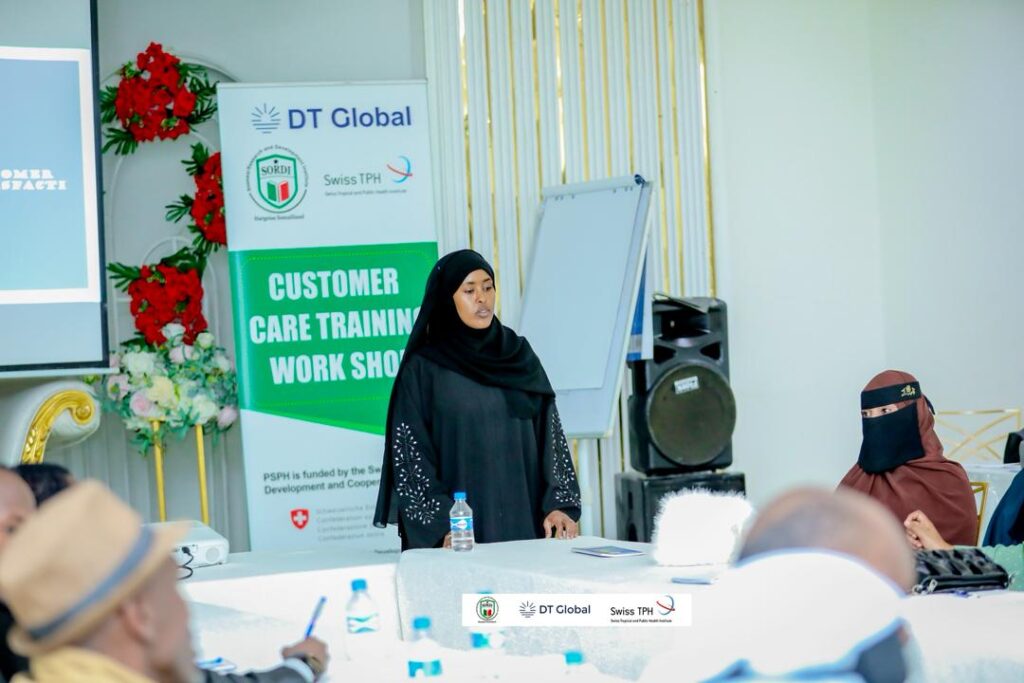
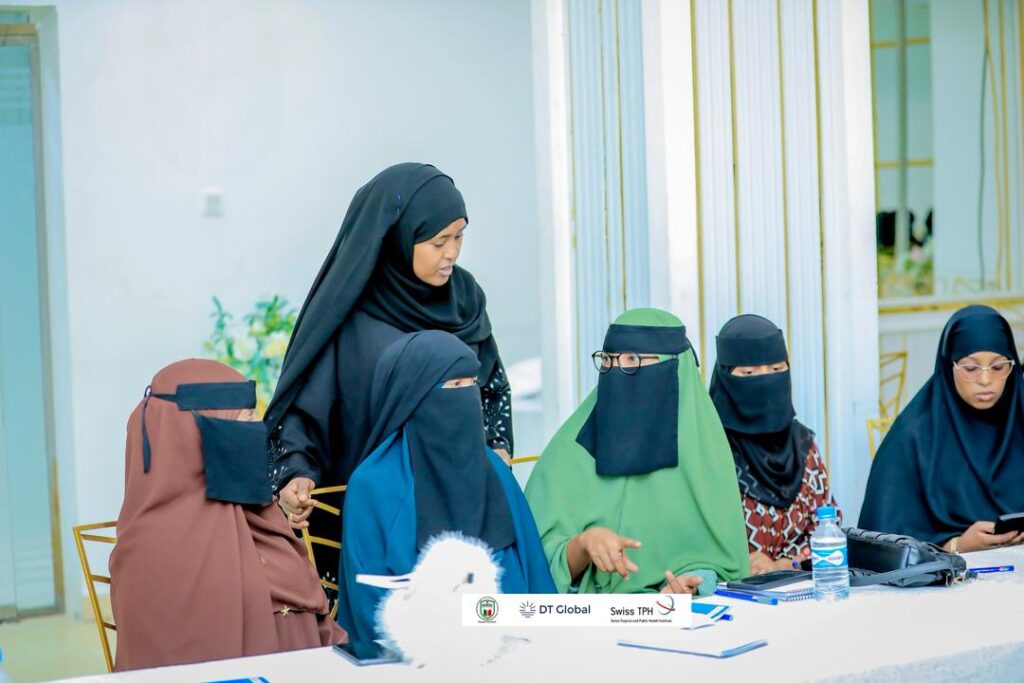
Quality healthcare extends beyond clinical expertise to encompass every patient interaction. On January 28, 2026, the Somali Research and Development Institute facilitated a Customer Care Training in Hargeisa, bringing together healthcare professionals from seven facilities—including security guards, receptionists, nurses, doctors, and managers—to address critical gaps in service delivery.
A comprehensive baseline assessment had revealed systemic challenges: most facilities lacked formal customer care training, telephone etiquette averaged just 2.8 out of 5, and patient complaints centered on unclear waiting times and pricing. Complaint handling remained largely informal despite available digital tools. These findings confirmed that while clinical capacity existed, the human dimension of care required systematic strengthening.
The half-day training employed participatory methodology, moving beyond lectures to facilitate honest dialogue across professional hierarchies. Participants identified real challenges—communication breakdowns between departments, patient anxiety from unclear waiting times, and environmental distractions—then developed facility-specific action plans addressing reception processes, interdepartmental communication, complaint handling mechanisms, and patient dignity. These plans provide practical roadmaps for measurable improvement, with PSPH intervention managers conducting follow-up visits to support implementation.
The strongest indicator of impact came through participant feedback. Rather than simply expressing satisfaction, participants demanded more—longer sessions, specialized modules on conflict management, regular refreshers, and blended learning options. This hunger for continued learning demonstrates genuine commitment to quality improvement and recognition that these skills are essential to professional effectiveness and patient outcomes.
This training reflects PSPH’s Market Systems Development approach, which recognizes that sustainable healthcare improvement requires strengthening entire ecosystems. By investing in customer care competencies, facilities can differentiate themselves in competitive markets, build patient loyalty, improve operational efficiency, and strengthen financial sustainability. As the local implementing partner of the PSPH project, the Somali Research and Development Institute, working with DT Global and the Swiss Tropical and Public Health Institute, remains committed to strengthening both clinical and human dimensions of healthcare across Somalia and Somaliland. Quality care is built on quality interactions, and every patient deserves respect, clarity, and dignity.